KYB KYB Suite - 01IEC Verification

IEC Verification

The Importer-Exporter Code (IEC) is a crucial business identification number required for both exports and imports, issued by the Directorate General of Foreign Trade (DGFT). Our IEC verification API enables you to easily confirm the authenticity of importers or exporters by simply inputting their Importer-Exporter code.

Live verification Replay

1 You send

Checking PAN compliance…

2 You get back
✓

OPERATIVEPAN is operative and 206AB is not applicable

482 ms

PANBLHPG4908E
PAN nameRXM GXXXXXXE
Allotment date12 Oct 2013
Financial year2024-25
PAN-Aadhaar linkLinked
PAN status✓ Operative
206AB applicable✓ No
Response time
< 8s
Uptime SLA
97%
Rate limit
60 req / min
Auth
Bearer token
Business problems solved

An unverified IEC can create bigger risks than a failed lookup.

Invalid, inactive, or outdated Importer Exporter Code (IEC) details can flow into trade, onboarding, and compliance workflows — surfacing later as shipment delays, rejected transactions, and counterparty risk. Verification at the point of entry helps identify these issues early.

Invalid or inactive IECs

Incorrect, inactive, or outdated IEC details can prevent businesses from being reliably verified for import and export transactions.

Manual IEC verification

Checking IEC details manually across trade records takes time and makes high-volume exporter and importer onboarding harder to manage.

Trade compliance gaps

Missing or mismatched IEC information can lead to incomplete business records, additional document checks, and delays in import-export workflows.

Request parameters

One required field. That's it.

Send a JSON body with the IEC Verification you want to verify. Optional flags let you control how much taxpayer detail is returned.

Parameter Type Description
iec_numberRequired string The Importer Exporter Code (IEC) to verify and retrieve the associated business details.
request_idRequired string Unique identifier for the verification request used to track the API transaction.
consentOptional string Consent indicator authorizing retrieval of IEC information. Use Y when consent is provided.
consent_textOptional string Consent statement confirming authorization to retrieve IEC information.
Response

Clean, typed JSON — every time.

A predictable response with the taxpayer's verified profile and current standing. Below: a live example and the field reference.

200 OK · responseRESPONSE
{
  "user_id": "BLHPG4908E",
  "pan_name": "RXM GXXXXXXE ",
  "pan_alotment_date": 1381516200000,
  "financial_year": "2024-25",
  "pan_aadhaar_link_status": "LK",
  "pan_status": "Operative",
  "aplicable_flag": "N",
  "pan_allotment_date_string": "12-10-2013"
}
Field Description
user_id string PAN number associated with the verification request.
pan_name string Name associated with the PAN record.
pan_alotment_date number PAN allotment date represented as a timestamp.
financial_year string Financial year for which the PAN compliance information is provided.
pan_aadhaar_link_status string Status indicating whether the PAN is linked with Aadhaar.
pan_status string Current operational status of the PAN.
aplicable_flag string Indicates whether the applicable 206AB compliance condition is triggered. Y or N.
pan_allotment_date_string string PAN allotment date formatted as a readable date.
Industry use cases

Where IEC verification earns its place.

A single check that helps validate importers, exporters, and trade partners across business workflows.

Banking & Financial Services

Verify IEC details during business onboarding and due diligence to validate importers and exporters before providing trade-related services.

Marketplaces & B2B

Validate seller, supplier, and business partner IEC details during onboarding to maintain accurate trade and counterparty records.

Trade & Compliance Teams

Verify IEC records in bulk to maintain accurate importer and exporter data and support ongoing trade compliance checks.

Logistics & Supply Chain

Check importer and exporter IEC details before processing trade-related transactions, shipments, and partner onboarding.

Integration process

Five-minute quick start.

Authenticate, send one request, read the status. The same pattern works across the entire KYB Suite.

1

Get your API key

Request access and receive sandbox credentials instantly - no procurement cycle to begin testing.

2

Authenticate

Pass your key as a bearer token over TLS in the Authorization header.

3

POST the GSTIN

Send a single JSON body to /v2/iec/verify. Add include_filing for compliance signals.

4

Read the status

Branch on status and filing_current, then flip from sandbox to production with one flag.

cURLREQUEST
# Verify IEC details
curl --location 'https://api.rpacpc.com/services/bv046' \
  --header 'Content-Type: application/json' \
  --header 'token: YOUR_TOKEN' \
  --header 'secretkey: YOUR_SECRET_KEY' \
  --data '{
    "request_id": "1234567890",
    "consent": "Y",
    "consent_text": "I hereby declare my consent agreement for fetching my information via RPACPC API",
    "iec_number": "AAVCA3930B",
    "date": "26/12/2022"
  }'
Status codes
200Success — The request was accepted and processed. Always read the response body — some validation outcomes are reported with a 200 and the reason inside the payload.
400Bad Request — The request itself is malformed: a required field is missing, or a value is in the wrong format.
401Unauthorized — Credentials are missing, wrong, or expired. Check the token and secretkey headers are being sent and belong to this environment.
403Forbidden — The credentials are valid but not allowed here — the endpoint is not enabled for your account, or the calling IP is not whitelisted.
404Not Found — The URL does not match any endpoint, or the record you asked for does not exist.
408Request Timeout — The request took too long to complete. Safe to retry once.
429Too Many Requests — You have exceeded the rate limit for your plan. Back off and retry after a short pause.
500Internal Server Error — Something failed on our side. Retry, and if it continues, contact support with the request_id you sent.
502Bad Gateway — An upstream source returned an invalid response. Usually transient — retry.
503Service Unavailable — The service or one of its upstream sources is temporarily down or overloaded. Retry with a delay.
504Gateway Timeout — An upstream source did not respond in time. Retry after a moment.
Blog

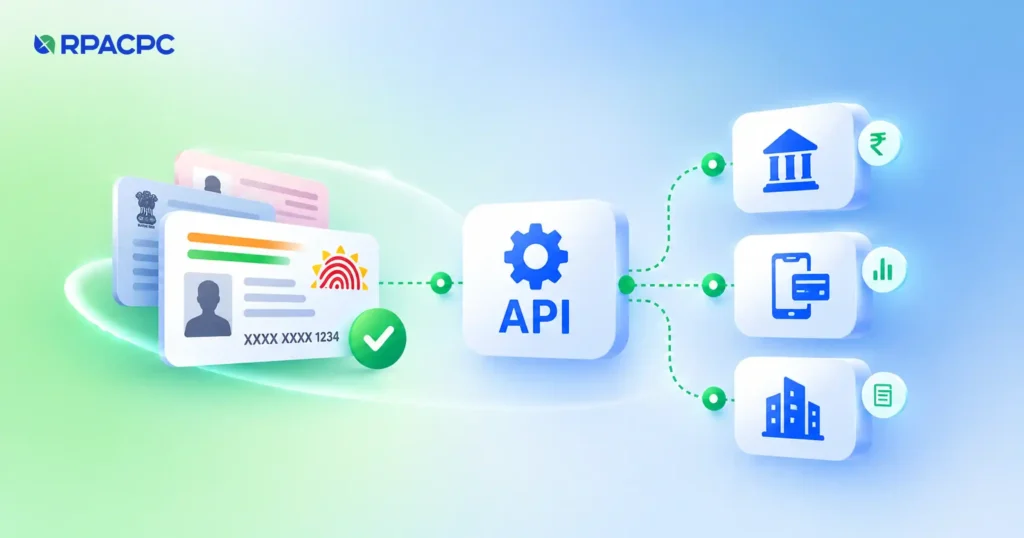
Government ID Check API: How Does It Help Banks, FinTechs, and NBFCs Streamline KYC?

Government ID Check API helps banks, FinTechs, and NBFCs streamline KYC with faster identity verification and reduced manual work.

Read More
Government ID Check API: How Does It Help Banks, FinTechs, and NBFCs Streamline KYC?
FAQ

Frequently asked questions

Common questions about the IEC Verification — what it returns, how fast it is, and how to integrate.

Still have a question? Talk to an expert
What is the IEC Verification API?
The IEC Verification API is a designed tool that authenticates importers and exporters by verifying their Importer-Exporter Code (IEC).
Why is the IEC important for businesses involved in international trade?
A crucial business identification number for imports and exports is the IEC, which ensures compliance with regulatory and trade standards.
How does the API work?
The API works by accepting an IEC as input and confirming its authenticity, providing peace of mind when dealing with importers and exporters.
Is the API’s verification process accurate?
Yes, the API ensures accurate validation, reducing the risk of engaging with unverified or fraudulent businesses.
Can businesses access real-time IEC information through the API?
Absolutely, the API provides real-time access to the latest IEC data, ensuring up-to-date verification.
Does the verification process handle the data securely?
Yes, the API maintains data security and confidentiality, safeguarding sensitive information.
Can you customize the API to meet specific business needs?
Yes, the API is customizable to align with the unique requirements of businesses.
How does the API assist with regulatory and trade compliance?
The API helps businesses adhere to regulatory and trade compliance standards by ensuring the validity of IECs.
How does the API enhance efficiency for businesses?
The API streamlines the verification process, saving time and resources, thus improving operational efficiency.

India's verification infrastructure is already here.

Empower your applications with India's Enterprise Verification Intelligence Platform for faster, more reliable verification.